

Introduction to Auto Engines
Auto engines, the heart of any vehicle, are complex mechanisms designed to convert fuel into motion. They operate on the principle of internal combustion, where fuel and air mix and ignite within the engine’s cylinders. This process powers the vehicle.
Key Components:
- Cylinders: The core chambers where combustion occurs.
- Pistons: Move up and down in the cylinders to generate motion.
- Crankshaft: Converts the piston’s linear motion into rotational motion.
- Spark Plugs: Ignite the fuel-air mixture for combustion.
- Valves: Control the intake of air and fuel and the exhaust of gases.
Types of Fuel:
- Gasoline
- Diesel
- Electric (hybrids)
- Alternative fuels
The Basic Operation of Internal Combustion Engines
An internal combustion engine operates through a series of controlled explosions within cylinders. These explosions convert fuel into mechanical energy by executing a four-stroke process:
Intake Stroke
-
- The intake valve opens.
- The piston moves down, drawing in a mixture of air and fuel.
Compression Stroke
-
- The intake valve closes.
- The piston moves up, compressing the air-fuel mixture.
Power Stroke
-
- The spark plug ignites the compressed mixture.
- The explosion forces the piston down, generating power.
Exhaust Stroke
-
- The exhaust valve opens.
- The piston moves up, expelling exhaust gases.
This cycle repeats continuously, driving the engine’s operation.
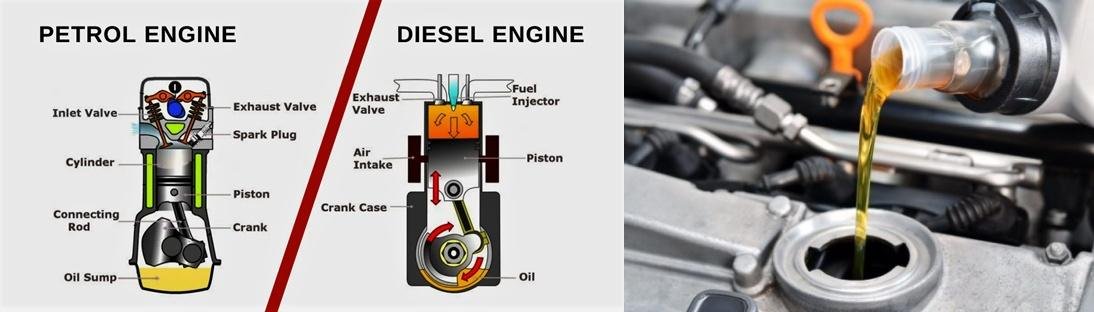
Types of Auto Engines: Gasoline vs. Diesel
Gasoline and diesel engines are the most prevalent types in the automotive sector.
Gasoline Engines:
- Operate on spark ignition.
- Otto cycle-based.
- Higher RPM range.
- Better suitability for lighter vehicles.
- Lower noise levels.
Diesel Engines:
- Utilize compression ignition.
- Diesel cycle-based.
- Greater torque at lower RPM.
- Favorable for heavier vehicles and towing.
- Higher thermal efficiency, offering better fuel economy.
Each engine type offers distinct advantages, depending on the vehicle’s intended use and performance requirements. Choices balance between fuel economy, power, and vehicle application.
Key Components of Auto Engines and Their Functions
- Engine Block: Forms the foundation, and houses cylinders.
- Cylinder: The core part where fuel burns.
- Piston: Moves within the cylinder, and converts energy.
- Crankshaft: Converts piston’s up/down rotary motion.
- Camshaft: Controls intake/exhaust valves.
- Valves: Regulate fuel/air mixture entry and exhaust exit.
- Spark Plug: Ignites fuel-air mixture.
- Fuel Injector: Delivers fuel into the cylinder.
- Timing Belt/Chain: Synchronizes camshaft and crankshaft.
- Oil Pan: Collects and stores engine oil.
“A well-maintained engine ensures efficiency and longevity.”
The Role of the Crankshaft and Camshaft
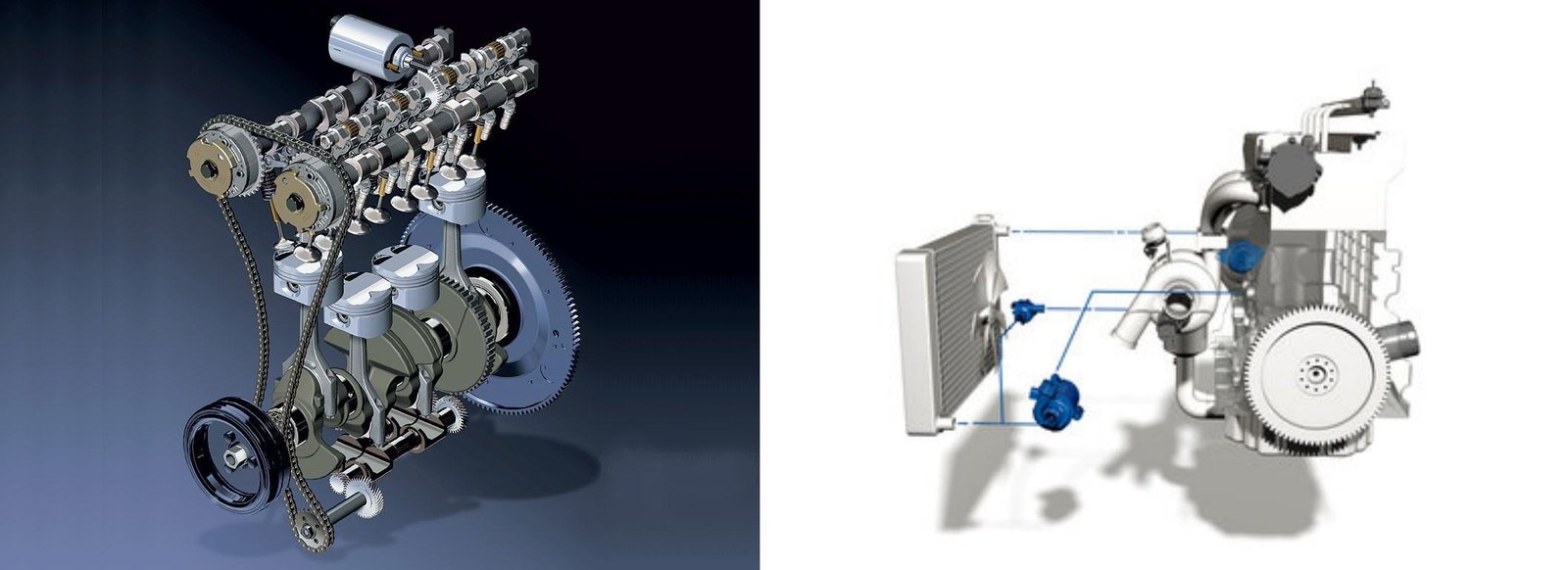
In an internal combustion engine, the crankshaft and camshaft play crucial roles:
Crankshaft:
-
- Converts the linear motion of the pistons into rotary motion.
- Connected to pistons via connecting rods.
- Powers ancillary components like the alternator and water pump.
Camshaft:
-
- Controls the timing of valve opening and closing.
- Synchronizes with the crankshaft via a timing belt or chain.
- Ensures optimal air-fuel mixture and exhaust gas flow.
Together, these components orchestrate precise mechanical movements, ensuring efficient engine performance and power delivery. Proper alignment and timing between the two are vital for engine functionality.
Understanding Fuel Injection Systems
Fuel injection systems are integral to modern auto engines. These systems replace carburetors by delivering fuel directly into the combustion chambers. Several benefits arise from their usage:
- Increased Efficiency: Provides precise fuel delivery.
- Enhanced Performance: Results in better acceleration.
- Reduced Emissions: Improves environmental compliance.
- Better Fuel Economy: Optimizes fuel usage.
Types of Fuel Injection Systems:
Throttle Body Injection (TBI):
-
- Known as single-point injection.
- Located in the throttle body.
Port Fuel Injection (PFI):
-
- Multi-point injection system.
- Individual injectors for each cylinder.
Direct Fuel Injection (DFI):
-
- Delivers fuel directly to the combustion chamber.
- Found in modern high-performance engines.
The Importance of Engine Timing
Engine timing is crucial for optimal performance and efficiency. Proper timing ensures that the spark plug ignites the air-fuel mixture at the precise moment, maximizing power output and fuel efficiency.
- Valve Timing: Controls the opening and closing of the intake and exhaust valves.
- Ignition Timing: Determines when the spark plug fires.
Incorrect timing can lead to:
- Low Power Output: Loss of engine efficiency.
- High Fuel Consumption: Increased operating costs.
- Engine Damage: Potential for severe mechanical issues.
Maintaining accurate engine timing is essential for prolonging engine life and ensuring smooth operation.
Cooling Systems: Keeping the Engine at Optimal Temperature
Cooling systems play a crucial role in maintaining the engine’s temperature. An efficient cooling system ensures that the engine operates within its optimal temperature range, preventing overheating or freezing.
- Components:
- Radiator
- Coolant
- Water Pump
- Thermostat
- Hoses
- Radiator Function: Dissipates heat from the engine coolant.
- Coolant Role: Transfers heat away from the engine.
- Water Pump: Circulates coolant throughout the system.
- Thermostat Operation: Regulates coolant flow based on engine temperature.
- Hoses: Channel coolant between components.
Effective cooling systems prolong engine life and maintain performance integrity.
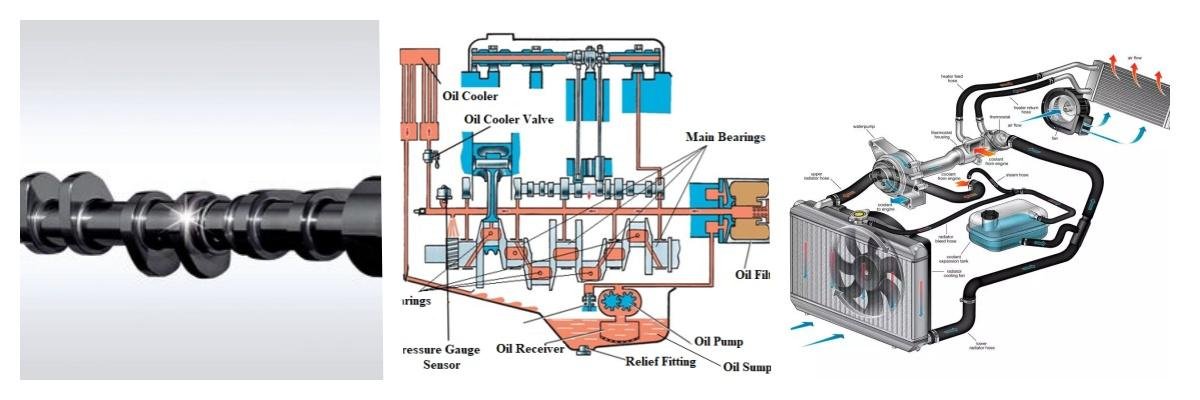
Lubrication Systems: Ensuring Smooth Engine Operation
Lubrication systems play a crucial role in maintaining engine health by reducing friction between moving parts. Key components include:
- Oil Pump: Circulates oil through the engine.
- Oil Filter: Traps debris and contaminants.
- Oil Pan: Stores oil in the engine’s lower section.
- Oil Galleries: Channels distributing oil to various engine parts.
Proper lubrication prevents wear and tear, ensuring longevity. Key benefits are:
- Reduced Friction: Minimizes engine part wear.
- Heat Dissipation: Helps in regulating engine temperature.
- Cleaner Engine: Helps remove contaminants.
Routine checks and timely oil changes are essential for optimal performance.
Modern Innovations in Auto Engine Technology
Recent advancements in auto engine technology have revolutionized the automotive industry. Key innovations include:
- Turbocharging and Supercharging: These technologies force more air into the engine, enhancing power and efficiency.
- Direct Fuel Injection: Delivers fuel directly into the combustion chamber, increasing precision and improving fuel economy.
- Variable Valve Timing (VVT): Adjusts the timing of valve operations to optimize performance and reduce emissions.
- Electric and Hybrid Engines: Combines electric motors with traditional engines, significantly reducing fuel consumption and emissions.
- Cylinder Deactivation: Shuts down certain cylinders when not needed, improving fuel efficiency during light engine loads.
These innovations contribute to better performance, efficiency, and environmental sustainability.
Maintenance Tips for Prolonging Engine Life
Proper engine maintenance is critical for optimal performance and longevity. To ensure engines run smoothly and last longer, consider the following tips:
Regular Oil Changes
-
- Use high-quality oil and follow manufacturer guidelines for change intervals.
Check and Replace Air Filters
-
- Clean or replace air filters to ensure clean airflow and optimal combustion.
Monitor Cooling System
-
- Regularly check coolant levels and inspect for leaks to prevent overheating.
Spark Plug Maintenance
-
- Inspect and replace spark plugs as per manufacturer recommendations for efficient ignition.
Timing Belt Inspection
-
- Regularly inspect and replace the timing belt to prevent engine damage.
Adhering to these practices can help maintain engine efficiency and prevent costly repairs.
Common Engine Problems and How to Troubleshoot Them
Overheating
- Check the coolant level: Low coolant can cause the engine to overheat.
- Inspect the radiator: Look for leaks, blockages, or damage.
- Examine the thermostat: Ensure it opens and closes correctly.
Starting Issues
- Test the battery: A weak or dead battery is a common cause.
- Check the starter motor: Look for signs of wear and tear.
- Inspect the ignition system: Faulty spark plugs can prevent starting.
Poor Fuel Efficiency
- Change the air filter: A clogged filter reduces efficiency.
- Check the fuel injectors: Dirty injectors can cause poor combustion.
- Inspect tire pressure: Under-inflated tires increase fuel consumption.
The Future of Auto Engines: Electric and Hybrid Technologies
Electric and hybrid engines promise to revolutionize the automotive industry. Key advancements include:
Electric Vehicles (EVs):
-
- Powered entirely by electric motors.
- Batteries are rechargeable via external power sources.
- Zero emissions; environmentally friendly.
Hybrid Vehicles:
-
- Combine internal combustion engines with electric motors.
- Two main types: Plug-in Hybrids (PHEVs) and Traditional Hybrids.
- Improved fuel efficiency and lower emissions.
Tesla, Nissan, and Chevrolet lead EV innovation. Toyota and Honda dominate the hybrid market. Auto manufacturers must invest in sustainable technologies to meet growing regulatory and consumer demands for eco-friendly transport options.
Conclusion: Integrating Knowledge for Better Automotive Care
Understanding the fundamentals of auto engines equips individuals with the necessary skills to maintain vehicle health. This knowledge allows:
- Improved diagnosis of engine issues.
- Informed communication with mechanics.
- Enhanced ability to perform basic repairs.
Awareness of engine parts, such as pistons, crankshafts, and fuel injectors, leads to better decision-making. It also promotes:
- Regular engine maintenance.
- Proactive identification of wear and tear.
- Efficient use of automotive resources.
Comprehending engine functionality is essential for recognizing signs of trouble early, thereby extending vehicle lifespan and ensuring safety on the road.

Engine repair is unavoidable in life, so how can you buy a high-quality engine? Shanhe Dongli – engine full-service provider, original parts assembly engine, we can make private cars restarted, but also allow enterprises to dock the brand’s original factory to reach cooperation, if you have the intention to cooperate, please contact us!